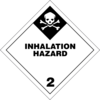
HazMat Tool — substance information

Liquefied gas, toxic, corrosive, n.o.s. Inhalation Hazard Zone A

HMT May 2026
UN / ID
UN 3308
Hazard class
2.3
Packing group
n/a (multiple — see tabs)
ERG guide
ERG 123
Special provisions
SP 1
Source
49 CFR §172 (2026/05)

Spot an error in this entry?

Liquefied gas, toxic, corrosive, n.o.s. Inhalation Hazard Zone A


Liquefied gas (sometimes referred to as liquid gas) is a gas that has been turned into a liquid by cooling or compressing it. Examples of liquefied gases include liquid air, liquefied natural gas, and liquefied petroleum gas. Wikipedia

Emergency Response Guide No. 123

Hazardous Materials Table

Source: 49 CFR §172 (2026/05)

(3) Hazard Class

2.3
Poisonous gas

(4) Identification number Help

UN 3308

(5) Packing Group Help

n/a

(6) Labels Help

Poisonous gas (2.3) Corrosive liquids (8)

(1) Symbols Help


This entry is signed with "G". The letter "G" identifies proper shipping names for which one or more technical names of the hazardous material must be entered in parentheses, in association with the basic description. (See §172.203(k)).
This entry is signed with "I". The letter "I" identifies proper shipping names which are appropriate for describing materials in international transportation. An alternate proper shipping name may be selected when only domestic transportation is involved.

(7) Special Provisions (§172.102) Help

×Note:
Special provisions may be very complex. The extracts are taken from 49 CFR §172.102. Please be careful with the information, as necessary, additional conditions may be applied that are not written here. Please check the original source and report bugs.
1

(8) Packing Authorizations (§173.***) Help

(8A) ExceptionsNone
(8B) Non-bulk192see 49 CFR §173.192
(8C) Bulk245see 49 CFR §173.245

(9) Quantity Limits Help

(9A) Passenger aircraft/railForbidden
(9B) Cargo aircraft onlyForbidden

(10) Vessel stowage Help

(10A) Location
(10B) Other

(3) Hazard Class

2.3
Poisonous gas

(4) Identification number Help

UN 3308

(5) Packing Group Help

n/a

(6) Labels Help

Poisonous gas (2.3) Corrosive liquids (8)

(1) Symbols Help


This entry is signed with "G". The letter "G" identifies proper shipping names for which one or more technical names of the hazardous material must be entered in parentheses, in association with the basic description. (See §172.203(k)).
This entry is signed with "I". The letter "I" identifies proper shipping names which are appropriate for describing materials in international transportation. An alternate proper shipping name may be selected when only domestic transportation is involved.

(7) Special Provisions (§172.102) Help

×Note:
Special provisions may be very complex. The extracts are taken from 49 CFR §172.102. Please be careful with the information, as necessary, additional conditions may be applied that are not written here. Please check the original source and report bugs.
2
B9
B14

(8) Packing Authorizations (§173.***) Help

(8A) ExceptionsNone
(8B) Non-bulk304see 49 CFR §173.304
(8C) Bulk314, 315see 49 CFR §173.314, 315

(9) Quantity Limits Help

(9A) Passenger aircraft/railForbidden
(9B) Cargo aircraft onlyForbidden

(10) Vessel stowage Help

(10A) Location
(10B) Other

(3) Hazard Class

2.3
Poisonous gas

(4) Identification number Help

UN 3308

(5) Packing Group Help

n/a

(6) Labels Help

Poisonous gas (2.3) Corrosive liquids (8)

(1) Symbols Help


This entry is signed with "G". The letter "G" identifies proper shipping names for which one or more technical names of the hazardous material must be entered in parentheses, in association with the basic description. (See §172.203(k)).
This entry is signed with "I". The letter "I" identifies proper shipping names which are appropriate for describing materials in international transportation. An alternate proper shipping name may be selected when only domestic transportation is involved.

(7) Special Provisions (§172.102) Help

×Note:
Special provisions may be very complex. The extracts are taken from 49 CFR §172.102. Please be careful with the information, as necessary, additional conditions may be applied that are not written here. Please check the original source and report bugs.
3
B14

(8) Packing Authorizations (§173.***) Help

(8A) ExceptionsNone
(8B) Non-bulk304see 49 CFR §173.304
(8C) Bulk314, 315see 49 CFR §173.314, 315

(9) Quantity Limits Help

(9A) Passenger aircraft/railForbidden
(9B) Cargo aircraft onlyForbidden

(10) Vessel stowage Help

(10A) Location
(10B) Other

(3) Hazard Class

2.3
Poisonous gas

(4) Identification number Help

UN 3308

(5) Packing Group Help

n/a

(6) Labels Help

Poisonous gas (2.3) Corrosive liquids (8)

(1) Symbols Help


This entry is signed with "G". The letter "G" identifies proper shipping names for which one or more technical names of the hazardous material must be entered in parentheses, in association with the basic description. (See §172.203(k)).
This entry is signed with "I". The letter "I" identifies proper shipping names which are appropriate for describing materials in international transportation. An alternate proper shipping name may be selected when only domestic transportation is involved.

(7) Special Provisions (§172.102) Help

×Note:
Special provisions may be very complex. The extracts are taken from 49 CFR §172.102. Please be careful with the information, as necessary, additional conditions may be applied that are not written here. Please check the original source and report bugs.
4

(8) Packing Authorizations (§173.***) Help

(8A) ExceptionsNone
(8B) Non-bulk304see 49 CFR §173.304
(8C) Bulk314, 315see 49 CFR §173.314, 315

(9) Quantity Limits Help

(9A) Passenger aircraft/railForbidden
(9B) Cargo aircraft onlyForbidden

(10) Vessel stowage Help

(10A) Location
(10B) Other

Packing group comparison

Multiple packing groups apply to this entry. See assignment criteria in 49 CFR §173 Subpart D. Details are in the tabs above; differences are highlighted.

PG n/a PG n/a PG n/a PG n/a
1G IG IG IG I
2Liquefied gas, toxic, corrosive, n.o.s. Inhalation Hazard Zone ALiquefied gas, toxic, corrosive, n.o.s. Inhalation Hazard Zone BLiquefied gas, toxic, corrosive, n.o.s. Inhalation Hazard Zone CLiquefied gas, toxic, corrosive, n.o.s. Inhalation Hazard Zone D
32.32.32.32.3
4UN 3308UN 3308UN 3308UN 3308
5 n/a n/a n/a n/a
62.3, 82.3, 82.3, 82.3, 8
712, B9, B143, B144
8ANoneNoneNoneNone
8B192304304304
8C245314, 315314, 315314, 315
9AForbiddenForbiddenForbiddenForbidden
9BForbiddenForbiddenForbiddenForbidden
10ADDDD
10B40404040

Segregation chart for load, transport, and storage

This chart shows whether loading, transport, or storage with other hazard classes is permitted, prohibited, or restricted. Based on 49 CFR §177.848.

Scope & sources (important)Click to show CFR references

This check evaluates segregation per 49 CFR §177.848. Additional loading/unloading and handling requirements may still apply; see 49 CFR §177 Subpart B (Loading and Unloading):

  • §177.834 - General requirements
  • §177.835 - Class 1 materials
  • §177.837 - Class 3 materials
  • §177.838 - Class 4 (flammable solid) materials, Class 5 (oxidizing) materials, and Division 4.2 (pyroforic liquid) materials
  • §177.839 - Class 8 (corrosive) materials
  • §177.840 - Class 2 (gases) materials
  • §177.841 - Division 6.1 and Division 2.3 materials
  • §177.842 - Class 7 (radioactive) material
  • §177.843 - Contamination of vehicles

Similar substances

UN / IDProper shipping nameHazard class
UN 3489Toxic by inhalation liquid, flammable, corrosive, n.o.s. with an LC50 lower than or equal to 1000 ml/m3 and saturated vapor concentration greater than or equal to 10 LC506.1
UN 3488Toxic by inhalation liquid, flammable, corrosive, n.o.s. with an LC50 lower than or equal to 200 ml/m3 and saturated vapor concentration greater than or equal to 500 LC506.1
UN 3390Toxic by inhalation liquid, corrosive, n.o.s. with an LC50 lower than or equal to 1000 ml/m3 and saturated vapor concentration greater than or equal to 10 LC506.1
UN 3389Toxic by inhalation liquid, corrosive, n.o.s. with an LC50 lower than or equal to 200 ml/m3 and saturated vapor concentration greater than or equal to 500 LC506.1
UN 3490Toxic by inhalation liquid, water-reactive, flammable, n.o.s. with an LC50 lower than or equal to 200 ml/m3 and saturated vapor concentration greater than or equal to 500 LC506.1
UN 3384Toxic by inhalation liquid, flammable, n.o.s. with an LC50 lower than or equal to 1000 ml/m3 and saturated vapor concentration greater than or equal to 10 LC506.1
UN 3383Toxic by inhalation liquid, flammable, n.o.s. with an LC50 lower than or equal to 200 ml/m3 and saturated vapor concentration greater than or equal to 500 LC506.1
UN 3388Toxic by inhalation liquid, oxidizing, n.o.s. with an LC50 lower than or equal to 1000 ml/m3 and saturated vapor concentration greater than or equal to 10 LC506.1
UN 3387Toxic by inhalation liquid, oxidizing, n.o.s. with an LC50 lower than or equal to 200 ml/m3 and saturated vapor concentration greater than or equal to 500 LC506.1
UN 3491Toxic by inhalation liquid, water-reactive, flammable, n.o.s. with an LC50 lower or equal to 1000 ml/m3 and saturated vapor concentration greater than or equal to 10 LC506.1
UN 3386Toxic by inhalation liquid, water-reactive, n.o.s. with an LC50 lower than or equal to 1000 ml/m3 and saturated vapor concentration greater than or equal to 10 LC506.1
UN 3385Toxic by inhalation liquid, water-reactive, n.o.s. with an LC50 lower than or equal to 200 ml/m3 and saturated vapor concentration greater than or equal to 500 LC506.1
UN 3382Toxic by inhalation liquid, n.o.s. with an LC50 lower than or equal to 1000 ml/m3 and saturated vapor concentration greater than or equal to 10 LC506.1
UN 3381Toxic by inhalation liquid, n.o.s. with an LC50 lower than or equal to 200 ml/m3 and saturated vapor concentration greater than or equal to 500 LC506.1
UN 3309Liquefied gas toxic, flammable, corrosive, n.o.s. Inhalation Hazard Zone B2.3